


Uncategorized
Choosing Flooring: Advanced Guide – Click Systems: Floor Gaps Appearing After Six Months? Unpacking 3 Major International Click Patents vs. Inferior Locking Traps
May
In recent years, SPC (Stone Plastic Composite) flooring has become the mainstream choice for home renovation in Hong Kong due to its waterproof, termite-proof, and highly wear-resistant properties. When choosing flooring, many homeowners only look at whether the pattern is attractive, whether the color tone matches their aesthetic, or simply decide based on price. However, they often overlook the most crucial core element—the Click / Locking System!
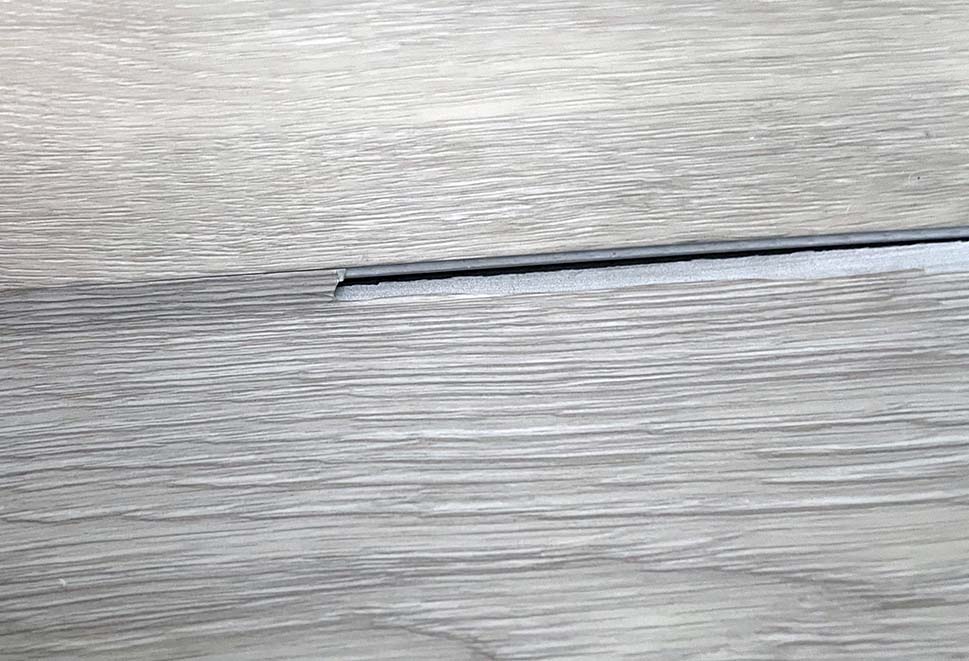
The click system is effectively the "skeleton" of the flooring. No matter how beautiful the surface pattern of an SPC floor is, if the locking mechanism is poorly machined, brittle, or overly thin, disaster will strike within a few months of installation—resulting in gapping, edge warping, or sharp edges that scratch feet.
In this article, we break down the root causes of inferior click systems, how material quality affects locking performance, the structural realities behind Hong Kong’s mainstream floor thickness, the pros and cons of the top 3 international click patents, and how to avoid industry specification traps!
1. What Does the Click System Do? Why Does It Determine Floor Lifespan?
SPC flooring relies on Floating Installation. The installation process requires no nails or glue, depending entirely on the mechanical interlocking of the click system between planks as they lay flat on the subfloor.
The click system serves three core missions:
-
Zero Glue & Zero Formaldehyde: Eliminates the need for adhesives, ensuring a safer home environment that allows immediate move-in after installation.
-
Resisting Tension & Preventing Gaps: Holds up against foot traffic, moving heavy furniture, and the expansion/contraction caused by Hong Kong’s hot, humid seasonal shifts, holding planks tightly together to prevent gaps.
-
Locking Vertical Height Differences: Ensures planks remain flush with one another, preventing raised edges from becoming tripping hazards.
2. Material Quality is the Foundation: How Virgin PVC and High-Density Stone Powder Impact Click Performance
If click patents (Uniclic, 5G, I4F) are the "structural blueprint" of a locking system, then raw material quality represents its "muscles and sinews." No matter how superior the design, inferior materials will cause the lock to snap under pressure.
-
Virgin PVC Provides Essential Flexibility:
-
High-Quality Virgin PVC: Features complete molecular chains that allow micro-level elastic deformation. As the locking joint engages, it retains slight flexibility, preventing brittle fracture under stress and maintaining long-lasting locking force.
-
Inferior Recycled PVC: Repeated processing breaks down molecular chains, making the core dry, hard, and brittle. The joint lacks flexibility, causing the locking lip to snap off instantly during installation or heavy load bearing.
-
-
High-Density Ultrafine Stone Powder ($\text{CaCO}_3$) Prevents Crumbling:
-
High-Purity Ultrafine Stone Powder: Creates a dense core free of microscopic air pockets. Machined locking grooves are smooth, solid, and precise. Under heavy furniture or slight subfloor unevenness, the base of the click joint can withstand high shear forces.
-
Coarse/Impure Stone Powder: Contains internal micro-voids that make machined edges crumble easily like digestive biscuits. Under foot traffic, stress concentrates at these voids, causing the locking mechanism to snap off at its root.
-
-
Golden Formulation Ratios and Annealing Processes:
-
Manufacturers attempting to cut costs by over-loading stone powder (reducing expensive PVC resin) create an overly rigid core lacking elasticity. Furthermore, skipping proper annealing heat treatment leaves internal thermal stresses unreleased, causing microscopic fissures along the locking profiles that result in tongue failure shortly after installation.
-
3. Exposed! Why Are "Inferior Click Systems" So Prevalent on the Market?
Many homeowners ask: "If the click system is so critical, why are low-grade versions flooding the market?" The answer lies in intense supply chain price wars and unspoken cost-cutting practices:
-
Extreme Price Wars: To offer bargain prices (e.g., cheap online imports), budget factories cut costs where consumers can't see—adding excessive cheap stone powder and recycled waste to cheapen the core, or thinning the SPC core so the click root becomes paper-thin.
-
vading International Patent Fees: The 3 major international patents charge a royalty fee per square meter. Knock-off factories manufacture unauthorized molds to save costs, but lacking original engineering blueprints, their machining tolerance is poor—either too loose (leading to automatic gapping) or too tight (causing structural micro-fractures when forced together).
-
Outdated Machinery and Worn Tooling: Milling precise click profiles requires high-precision European machinery and costly diamond milling blades. Budget factories push worn blades past their service life, creating jagged, burred, or uneven locking edges.
-
Capitalizing on Information Asymmetry: Buyers focus almost exclusively on surface aesthetics. Because the click mechanism is hidden on the sides, everyday consumers cannot evaluate its quality. Furthermore, low-grade lock failures are delayed—occurring 6 to 12 months after installation—long after budget sellers have vanished or refused accountability.
4. At a Glance: High-Quality vs Inferior Click Systems
| Comparison Item | High-Quality | Inferior |
| Raw Material Quality | High-purity Virgin PVC + High-density Ultrafine Stone Powder | Low-grade Recycled PVC + Coarse Impure Stone Powder (Excessive Stone Ratio) |
| Appearance & Structure | Thick joint root, smooth and precise contours, dense core without air pockets | Thin and flimsy root, burred or jagged edges, crumbles easily |
| Core Flexibility | Well-balanced formula with micro-flexibility; resists snapping when bent | Dry and brittle texture; breaks easily under finger pressure like a cracker |
| Installation Feel | Glides smoothly into place at the correct angle with a firm, solid engagement | Extremely difficult to align, requiring heavy hammering that damages internal joints |
| Post-Installation Performance | Seamless joints, perfectly smooth underfoot without raised edges | Prone to gapping, popping, and uneven height differences |
| oad-Bearing Resistance | Maintains integrity under heavy furniture (wardrobes, pianos) without deforming | Snaps easily under heavy loads if the subfloor has minor unevenness |
5. Comparing the Top 3 International Click Patents: Which Is Best for You?
When purchasing SPC flooring, identifying official patent logos on the packaging or spec sheet is your assurance of quality:
-
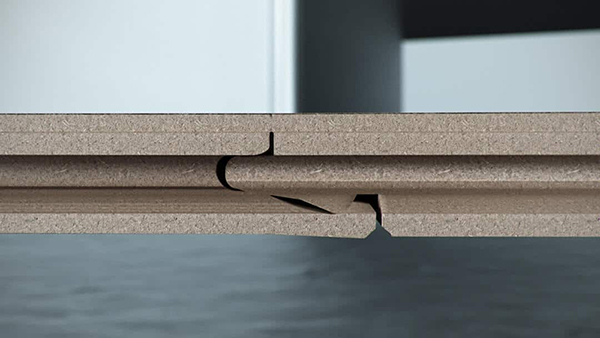
1. Uniclic (Belgium) — The King of Gap Prevention
-
Technical Highlight: Uses an exclusive "Pre-tension" design. Once locked, a slight tension is maintained in the lower lip, continuously pulling the planks inward toward each other. Offers the strongest gap resistance among all three options.
-
Key Consideration: Locks very tightly and requires installation at a specific angle (angled insertion), demanding skilled workmanship. However, with proper technique (lifting the plank to a specific angle to disengage), it can be unlocked and re-installed without damage.
-
Best Suited For: Homes with heavy furniture, large living rooms, homeowners seeking maximum durability, and projects installed by professional contractors.
-
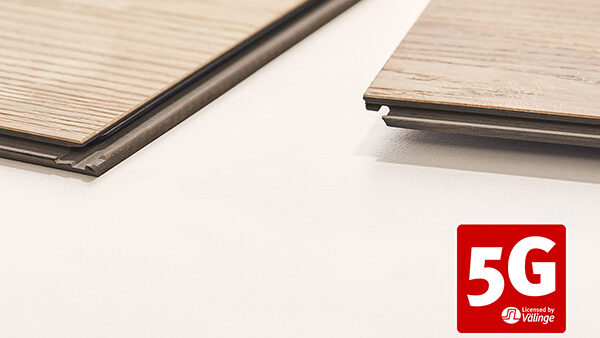
2. Välinge 5G (Sweden) — The Fast-Fit & DIY Favorite
-
Technical Highlight: Features a flexible plastic insert/tongue on the short side. Drop the plank down and push; an audible "click" confirms it is locked into place, making installation extremely fast.
-
Key Considerations:
-
Highly dependent on subfloor flatness: The drop-lock vertical mechanism is vulnerable to subfloor voids. If the subfloor is uneven, vertical shear forces from foot traffic can easily snap the joint or plastic insert.
-
Non-reusable: The plastic insert locks permanently. Attempting to lift the short edge will damage the mechanism; long-term exposure to high humidity also carries risk of insert aging.
-
-
Best Suited For: DIY installers, projects requiring fast completion, perfectly flat subfloors (e.g., new developments), and spaces where relocation or re-laying the floor is not planned.
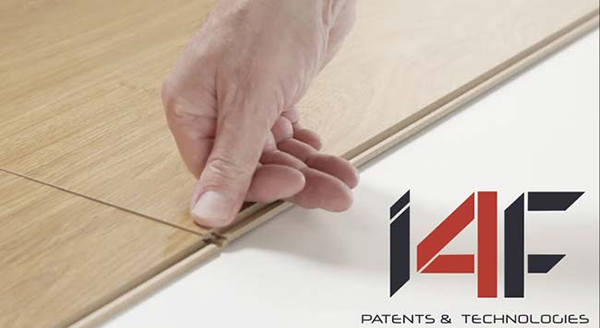
- I4F (Belgium) — High-Efficiency Drop-Lock System
-
Technical Highlight: Utilizes precise geometric hooks to lock vertically upon drop-down without needing an external plastic insert, relying entirely on the precision and strength of the core material.
-
Key Considerations:
-
Also highly dependent on subfloor flatness: Like 5G, as a drop-lock system, any subfloor depression creates a void that crushes the locking hook under foot pressure, causing short edges to pop up.
-
Non-reusable: Once locked, shear forces concentrate heavily on the hook. Disassembly usually breaks the lock, making it effectively a one-time installation.
-
Demands premium raw materials: If the core formulation is poor (high recycled content, excessive stone powder), the lock becomes brittle and snaps during vertical press-fit.
-
-
Best Suited For: Quick installations on flat subfloors, using high-grade virgin SPC flooring, where re-use is not required.
6. Expert Advice: Demystifying Hong Kong Market Specs & Buyer Traps
-
Decoding Hong Kong’s Mainstream "6.5mm – 8.0mm" Thickness (Focus on Pure SPC Core Thickness): In Hong Kong, interior designers and retail stores frequently recommend 6.5mm to 8.0mm heavy-duty SPC floors. When choosing flooring, homeowners must break down what this "total thickness" actually consists of internally:
-
Superior Construction: For instance, "6.5mm Pure SPC Rigid Core + 1.5mm Acoustic Underlayment = 8.0mm Total Thickness." Excluding the underlayment, the pure SPC core is a solid 6.0mm–6.5mm. This allows for thick, robust locking groove profiles that deliver maximum joint strength and load resistance—representing a truly top-tier specification.
-
Specification Trap: Some brands advertise an 8.0mm total thickness, but the breakdown is actually a "5.0mm thinned core + 2.0mm extra-soft underlayment." An overly thick or soft pad creates an unstable "hard-on-top, soft-underneath" structure. Under foot pressure, the rigid plank sinks vertically, flexing the click joint up and down with every step, snapping the locking root within six months due to vertical shear stress. Golden Rule: Always ask: "Excluding the attached underlayment and wear layer, how thick is the pure SPC Rigid Core itself in the middle?" (In the Hong Kong market, a pure SPC core reaching 6.0mm or above paired with an international click patent represents the most durable, hassle-free, top-tier choice).
-
Beware of "LVT + SPC Composite Flooring": Some products boast an 8mm thickness, claiming that adding an LVT vinyl layer provides a softer, more comfortable footfeel. However, this is counterproductive! The footfeel improvement from LVT is minimal, while adding 1 to 2 LVT layers severely compresses the central SPC rigid core where the click mechanism is milled. This leaves the locking root thin and weak, making it just as prone to snapping under normal foot traffic or heavy furniture.
-
Subfloor Flatness is Essential (Especially for Drop-Lock Systems): Click systems cannot tolerate subfloor hollows or gaps. If height variations exceed 3mm over a 2-meter span, foot pressure subjects the joint to damaging shear forces that cause fractures. When selecting fast-fit click systems such as 5G or I4F, the subfloor must be properly leveled prior to installation.
-
Expansion Gaps Are Mandatory Along Walls: Always leave a 6mm–8mm perimeter expansion gap along walls. This provides room for the floor to expand and contract naturally during seasonal shifts, preventing planks from squeezing against each other and causing joint buckling or tenting.
Conclusion
When selecting SPC flooring, surface aesthetics determine how your home looks, but the click system structure, virgin raw materials, and a solid 5.0mm+ pure SPC core determine how long your floor will last! Avoid sacrificing durability for bargain prices or marketing gimmicks that mask thinned cores and unpatented locking systems.


 DEHOME
 FLOORIGO
 NEVESAM
 SYLVANIX
 THE FLOOR